Editorial
DOI:
https://doi.org/10.63608/ssj.4184Abstract
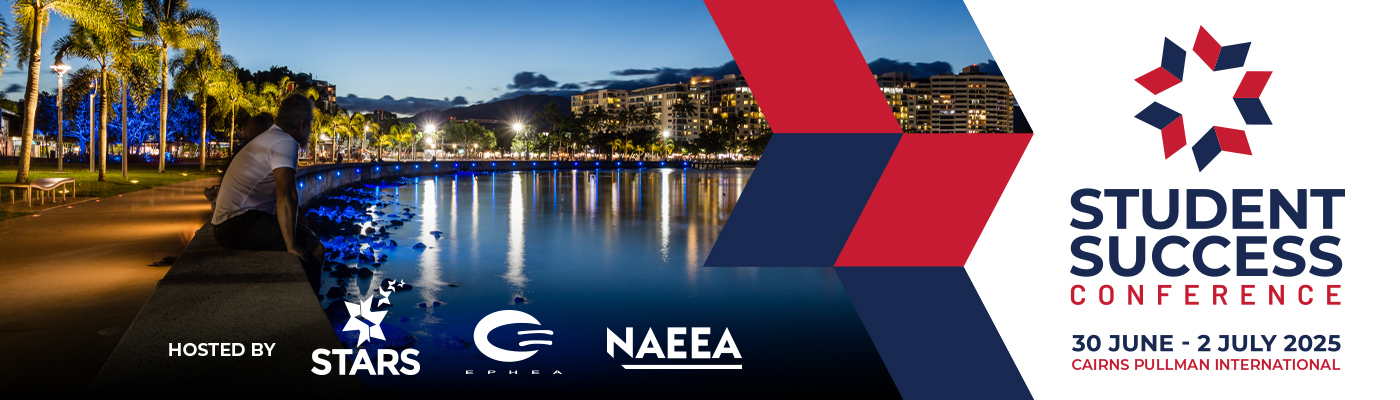
In 2026, once again the Students Transitions Achievement Retention & Success Conference (STARS), Equity Practitioners in Higher Education Australasia (EPHEA) and National Association of Enabling Educators of Australia (NAEEA) joined together to host the Student Success Conference. This third year of collaboration proved to be another excellent opportunity to disseminate current research, good practice, progressive ideas and opportunities focused on enhancing access and outcomes for students in post-secondary education. This year’s Conference was held on the Sunshine Coast, Queensland, where a record attendance of over 300 delegates shared their evidence-based research and practice, focussed on building student success from transition into university to graduation out and beyond.
This Special 2026 Student Success Conference issue brings together the accepted peer-reviewed articles and selected Good Practice reports. The very high number of submissions resulted in the acceptance of 11 peer-reviewed research articles, 10 from within Australia and one from South Africa, and three Good Practice Reports. Good Practice Reports are an integral part of the Student Success Conference program, being peer-reviewed submissions that outline practical initiatives, evaluations, and evidence-based institutional strategies for enhancing tertiary student engagement and retention, aligning with the four key themes of the Conference, of Students, Transitions, Achievement, Retention and Success. The three that are published here were selected from the many excellent Good Practice Report presentations at the Conference.
The editorial team are particularly grateful to all the authors, reviewers, Advisory Board and Editorial Board members, for their sustained and generous support of this open access publication.
Downloads
Downloads
Published
How to Cite
Issue
Section
License
Copyright (c) 2026 Cathy Stone, Karen Nelson

This work is licensed under a Creative Commons Attribution 4.0 International License.
Authors retain copyright and grant the Journal right of first publication with the work simultaneously licensed under a Creative Commons Attribution International Licence (CC BY 4.0) that allows others to share the work with an acknowledgement of the work's authorship and initial publication in this journal.